
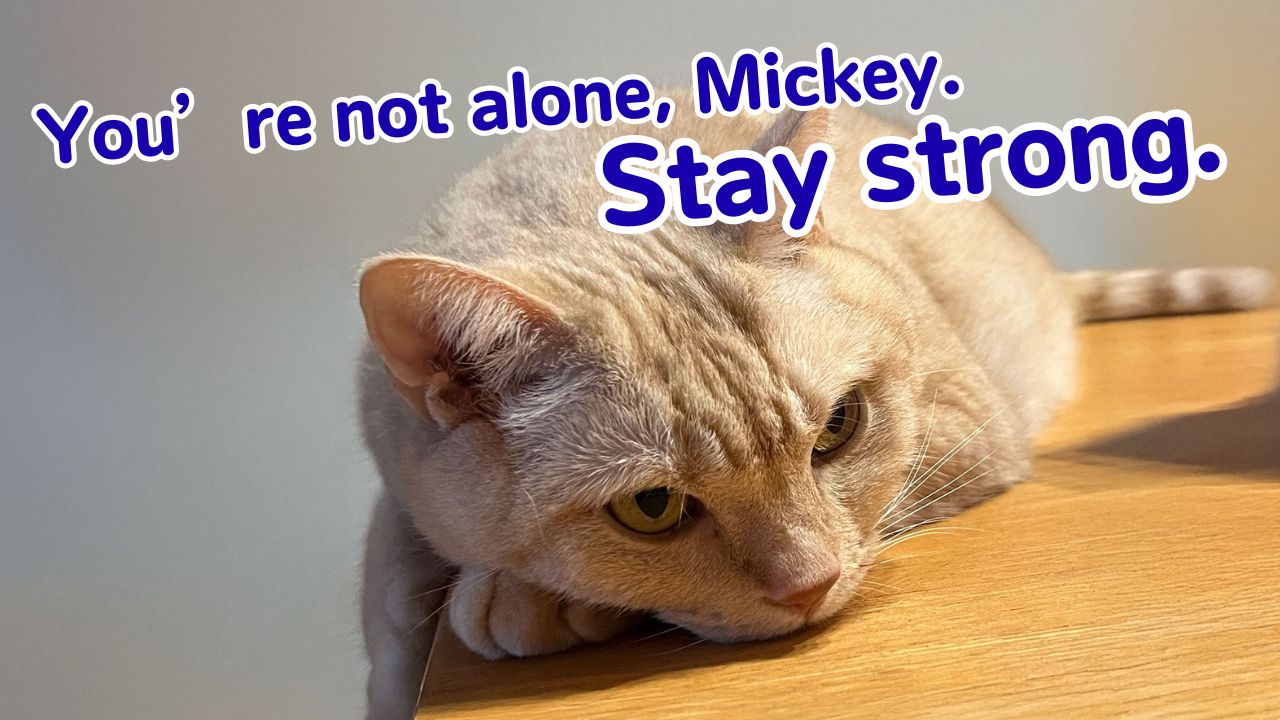
This is a personal record of my life with my cat, Mickey, who lives with a chronic illness.
The English version is translated with the help of AI tools, with care and love.
This post was originally published on June 17, 2025.
An Unexpected Change in Mickey’s Health
For Mickey, who is living with stage 4 kidney disease, even the smallest changes can quickly become serious. Recently, we faced another decline in his condition, and what followed was more than just a return of appetite loss — it became a new and frightening development.
Just a few months ago in late April, Mickey experienced his first episode of appetite loss and was diagnosed with kidney disease. After some time of instability, his appetite gradually improved by mid-May, and we were genuinely hopeful for more peaceful days ahead while continuing subcutaneous fluids and his medication, RAPROS.
Then suddenly, Mickey stopped eating almost entirely. He wouldn’t even touch his favorite Churu jelly, something he usually loves.
First Veterinary Visit — Distress and Heavy Breathing
We rushed to the veterinary clinic. But as soon as Mickey entered the exam room, he responded as if he were a completely different cat — scared, angry, and in resistance. He struggled so much that an Elizabethan collar was placed on him, and even during the blood draw he growled and strained. Eventually, he began rapid, heavy breathing, with pronounced “panting” that worried us deeply.
Because his distress was so intense, the vet decided not to give treatment that day beyond testing, and we also paused his usual subcutaneous fluids and RAPROS temporarily to reduce physical stress.
At Home — Persistent Heavy Breathing
Back at home, Mickey’s heavy breathing did not settle. Even the next day, he continued to breathe hard with effort. We worried that another trip to the clinic might cause him further stress — but ultimately, we decided he needed to be examined again.
Second Visit — Pulmonary Edema Diagnosed
On the second day at the veterinarian, the team performed chest X-rays to investigate potential causes beyond his kidneys. Once again, Mickey struggled and breathed heavily.
The X-ray revealed that fluid had accumulated in Mickey’s lungs, a condition known as pulmonary edema. This means fluid is filling parts of the lungs where oxygen exchange should occur, making breathing difficult and potentially becoming life-threatening if left untreated.
Pulmonary edema in cats can be caused by several factors. It is often linked to heart conditions (such as hypertrophic cardiomyopathy), but can also occur when the body is unable to eliminate excess fluid — for example when other illnesses or fluid therapy strain the system.
Because the lungs were so obscured by fluid on the X-ray, the vet could not clearly see Mickey’s heart — and so the immediate priority became removing or managing that lung fluid.
Treatment and Ongoing Care
Mickey was prescribed a 5-day course of diuretics, medications that help the body remove excess fluid and ease breathing. The vet explained that if the medicine works as expected, Mickey’s breathing should become noticeably easier within a day or two.
Four days into treatment, we have seen slight improvement in his breathing. But our hearts are still heavy, and each moment feels urgent. Still, his appetite has begun to return a little, giving us hope even amid worry.
Tomorrow we will return to the clinic for another set of X-rays to reassess both his lungs and his heart.
What We Can Do Now
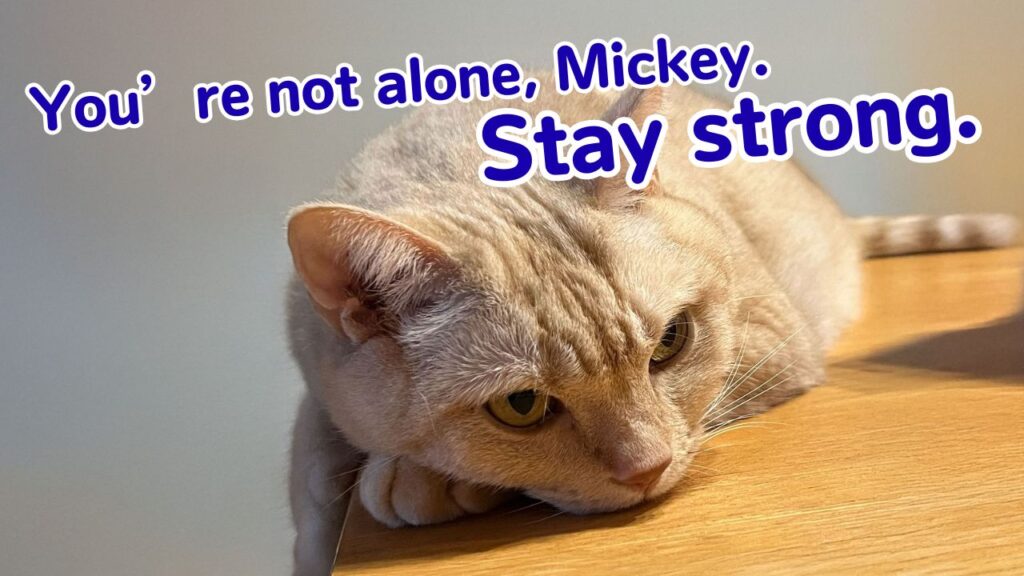
Facing stage 4 kidney disease alongside pulmonary edema is overwhelming. Honest fear and questions crowd the mind — yet we choose to put our trust in Mickey’s strength and will to live. We are learning to balance prayer and patience, watching his breathing and offering gentle care as we go through each day.

コメント